
When engineering a new mechanical assembly,deciding between custom springs and stock springs is a key design and procurement decision. It can have a significant impact on the reliability, safety and overall lifecycle cost of your equipment.
The fundamental difference comes down to immediate availability versus the exact operational fit:
Stock springs are pre-manufactured to standard dimensions and specifications, making them ideal for applications requiring quick delivery and cost-effective, general-purpose components.
Custom springs are designed and manufactured to meet exact requirements. They allow for precise load tolerances, exact spatial dimensions and specialist material selection for harsh industrial environments.
As leading custom spring manufacturers, European Springs and Pressings provides high-quality solutions across both categories. This guide will help your design and production teams navigate these options based on your practical engineering requirements.
What Is a Standard Stock Spring?
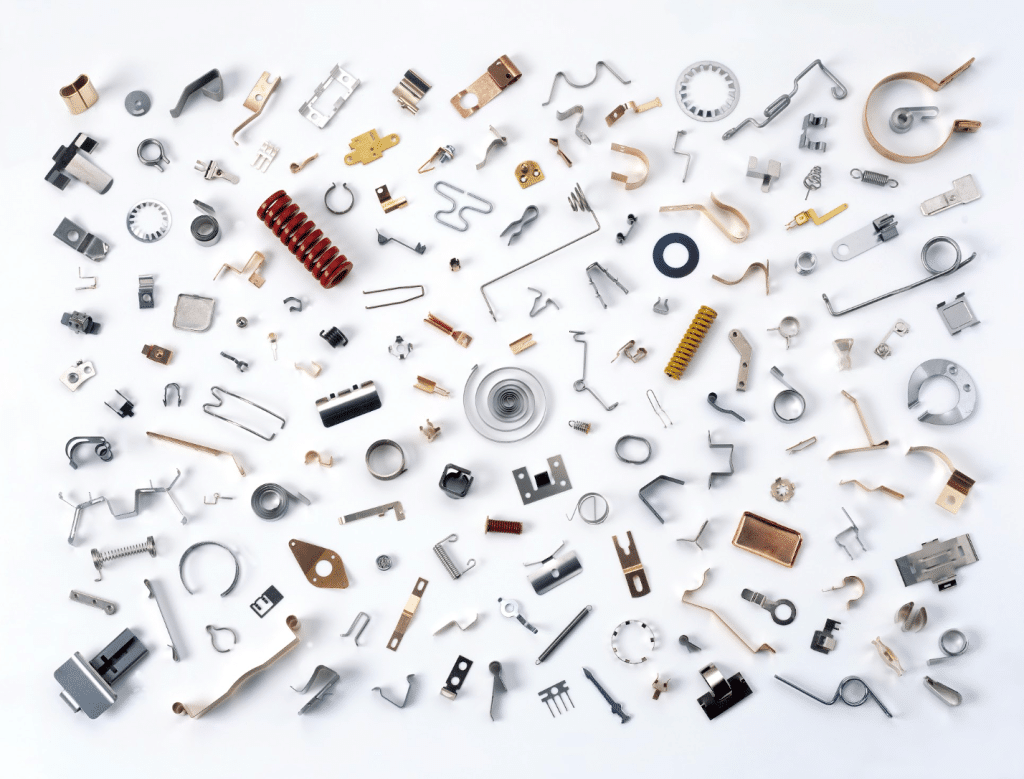
A standard stock spring is a pre-manufactured component produced to general industry dimensions and held in an extensive inventory for immediate dispatch. Our standard catalogue covers millions of specifications across compression springs, tension springs and torsion springs.
Because they are made to standardised sizes and tolerances, they are produced in high-volume batch quantities using common carbon steels and standard stainless steel grades. This allows for efficient production and rapid availability without the lead times associated with bespoke manufacturing.
As they are ready to ship immediately, standard elements provide an excellent engineering solution when your housing can easily accommodate off-the-shelf sizes without requiring highly specific spring rates or custom load dimensions. Project managers frequently rely on these inventory components for basic mechanical applications, rapid facility maintenance and early-stage prototype development.
The Engineering Behind Custom Spring Design
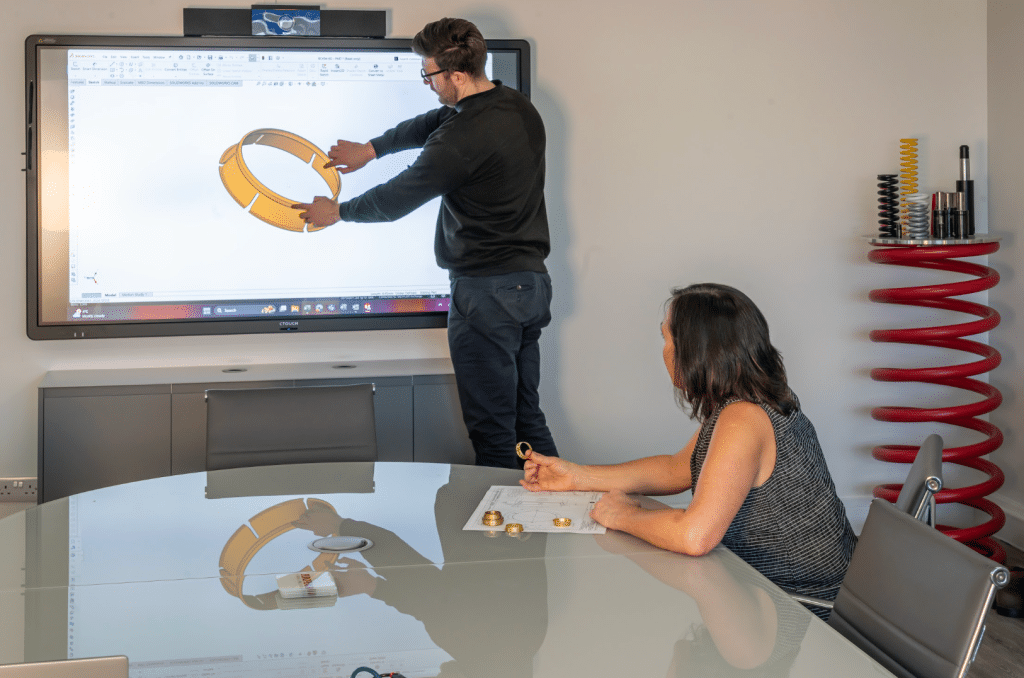
Bespoke custom spring design becomes necessary when an industrial application features unique physical, mechanical or environmental constraints. Tight spatial housings, precise load requirements and extreme temperatures demand wire dimensions and performance characteristics that standard catalogues cannot provide.
A custom spring manufacturer builds components from the ground up, allowing for exact material selection tailored to your specific environment. We regularly manufacture parts using high-performance specialist alloys, including:
These materials maintain their tensile strength and structural integrity under severe conditions where standard commercial steel would warp or degrade completely. Custom engineering guarantees that the final component fits perfectly within your product housing.
Our technical team guides you through every stage of the spring manufacturing process, from wire diameter and pitch adjustments to mechanical stress analysis and fatigue life calculations.
Direct Comparison of Component Types
Understanding these core operational differences helps your team make informed decisions and check corporate engineering standards:
| Feature | Standard Stock Springs | Bespoke Custom Springs |
| Lead Time | Immediate dispatch from existing inventory. | Requires a dedicated production cycle for tooling, setup, and validation testing. |
| Initial Cost | Lower upfront investment; economical for small batches. | Involves initial design, engineering, and tooling fees. |
| Performance Focus | Built for general-purpose, non-critical assemblies. | Application-specific; mathematically optimised for exact loads. |
| Material Selection | Restricted to common high-volume steel grades. | Can deploy any specialist, high-performance alloy required. |
| Product Housing | May require you to alter your housing design to fit the spring. | Custom-built to fit the exact space constraints of your existing housing. |
When to Specify Standard Inventory
You should specify standard stock components when your mechanical design allows for flexible spatial tolerances and operates under standard environmental conditions. They are highly effective for budget-sensitive projects where custom manufacturing would exceed the financial scope of the production run.
Maintenance teams across the UK and Europe frequently use stock options to complete rapid factory repairs, ensuring production lines get back up and running without waiting for a dedicated manufacturing run. Standard configurations are also widely used as standard catches, die springs, or flat springs in domestic appliances and basic mechanical assemblies.
Applications Requiring Custom Spring Manufacturing
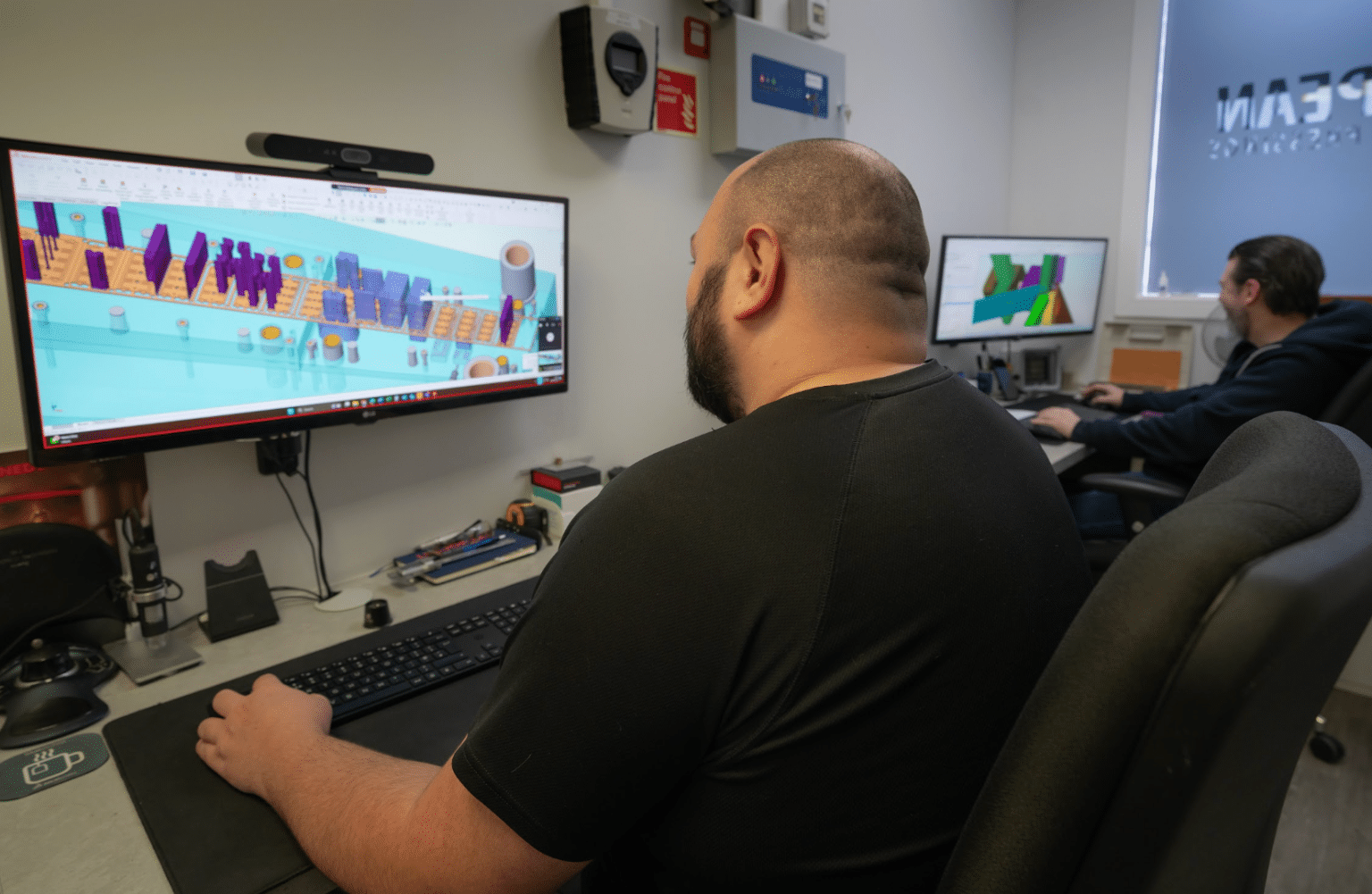
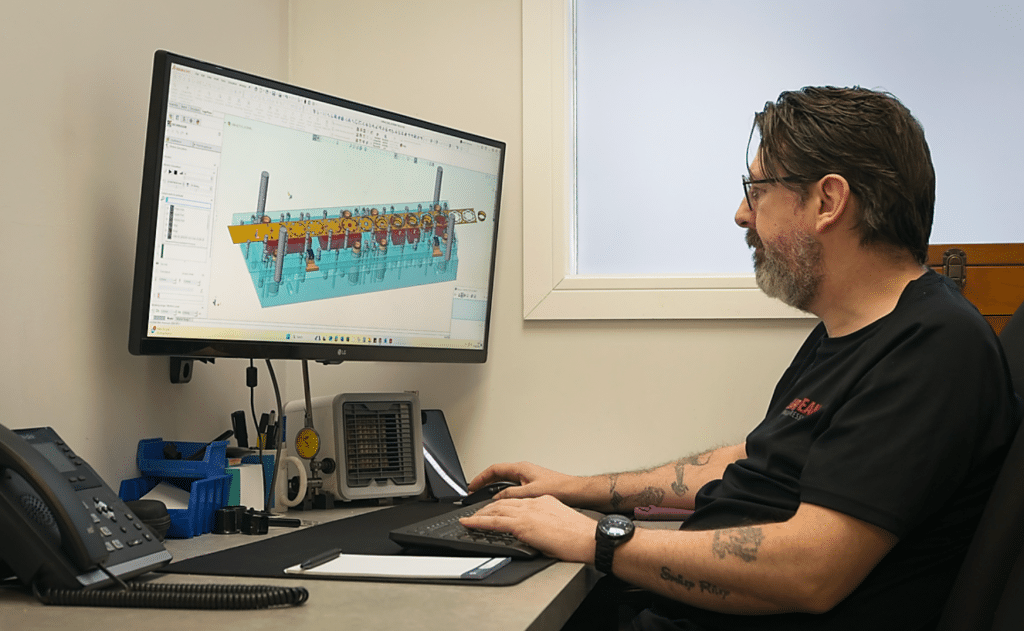
Safety-critical industrial sectors frequently operate within environments with absolutely no margin for mechanical error. When standard catalogue specifications cannot meet these rigorous demands, our technical team utilises advanced CNC machinery and specialist CAD software to achieve microscopic precision. This dedicated engineering approach ensures that complex components, such as custom flat spring design and constant torque spring configurations, are mathematically optimised for your exact industrial application.
Our custom engineering capabilities are primarily trusted across four safety-critical sectors:
- Custom springs for oil & gas: Requiring high-corrosion resistance in subsea and offshore environments.
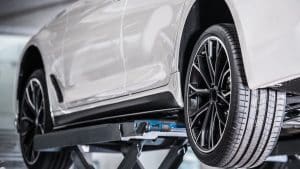
- Custom springs for vehicle suspension: Demanding exact shock absorption and rigorous safety tolerances for automotive applications.
- Custom springs for agriculture: Built to withstand harsh, abrasive outdoor environments and heavy-duty machinery stress.
- Custom springs for medical devices: Requiring microscopic precision, biostability and strict regulatory compliance.
By altering wire diameters, adjusting active coils and switching to high-performance alloys, our engineers deliver products that eliminate premature structural failure. We conduct rigorous stress testing to ensure long-term reliability under extreme cyclic loading, protecting your machinery from costly downtime.
Evaluating Total Lifecycle Costs
Industrial teams often assume bespoke engineering is extremely expensive because of initial tooling and machine setup investments. Yet, when you conduct a comprehensive analysis of total lifecycle costs throughout the project, the long-term financial reality shifts in favour of precision manufacturing.
Components designed specifically for their environment experience significantly reduced failure rates over time. They require less ongoing maintenance and prevent unexpected machine breakdowns. Spending slightly more on precise engineering upfront frequently saves businesses thousands of pounds in replacement parts and operational downtime over the lifespan of the machinery. This makes custom options a highly cost-effective solution for complex industrial applications.
Key Questions for Your Engineering Team
Before making your final component choice, review these crucial engineering factors with your design team:
- What exact load capacity and spring rate must the component support daily?
- Is the installation product housing restricted or flexible?
- Will the machinery operate in corrosive environments, extreme heat or cryogenic temperatures?
- What is the expected operational lifespan and fatigue life of the final product?
- Are standard inventory sizes available that closely match these strict requirements?
If your application requires dimensions or load capacities that fall outside standard catalogue specifications, your project requires bespoke engineering. The engineering team at European Springs and Pressings is ready to assist. Whether you need immediate access to our extensive catalogue of standard components or require advanced spring design, contact our UK suppliers today to discuss your exact manufacturing specifications.
Frequently Asked Questions
What is the difference between a stock spring and a custom spring?
A stock spring is pre-manufactured to standard dimensions and kept in inventory for fast delivery. A custom spring is engineered and made to order specifically to meet unique load, space and environmental requirements that standard parts cannot accommodate.
What material are springs made of?
Standard stock springs are typically manufactured from carbon steel and standard grades of stainless steel. Custom springs can be manufactured from those standard materials or from specialised high-performance alloys such as Inconel. Hastelloy, Nimonic, titanium, phosphor bronze and beryllium copper to meet specific environmental demands.
How are springs manufactured?
Springs are manufactured by coiling, forming or stamping wire and strip materials using advanced CNC spring-coiling machinery. Custom designs go through a dedicated engineering process involving CAD software design, precise machine setup, and custom heat treatment to set the tensile properties.
How long does a spring last?
The expected lifespan of a spring depends entirely on its material composition, the operating environment, and the cyclic stress it undergoes. Custom engineered springs are specifically calculated to achieve a predetermined fatigue life, making them significantly longer-lasting in harsh industrial conditions than general-purpose stock options.
Can standard components be modified?
Attempting to physically alter a catalogue part (such as cutting a compression coil) permanently compromises the structural integrity of the wire, alters the spring rate, and shortens its lifespan. Designing a bespoke component provides the safest and most reliable method for achieving exact mechanical requirements.