
Sourcing high-performance industrial springs for critical industries requires a deep understanding of operational limits, material science, and manufacturing thresholds to prevent catastrophic equipment failure.
Whether your project depends on immediately available stock springs to keep a production line running, or highly complex springs made to order for extreme environments, selecting the right partner is crucial. As a leading choice for specialist springs and premium compression springs UK firms rely upon, European Springs & Pressings delivers precision engineering across multiple sectors. From heavy-duty large springs to custom wireforms, getting the specification right is what secures long-term reliability for springs UK-wide and globally.
The Reality of a Mechanical Failure
When a subsea valve fails or an aerospace actuator jams, the investigation rarely points to a massive structural collapse. Instead, it almost always comes down to a minor component that could not handle the harsh reality of its operating environment. A spring might look like a simple piece of coiled wire, but in high-responsibility applications, it is a finely tuned energy-storage device functioning under immense continuous stress.
If a spring relaxes by even a fraction of a millimetre over thousands of cycles, the calibration of the entire system drifts. In high-stake fields like medical device manufacturing, defence or oil and gas, that tiny drift can have severe consequences. This is why procurement and design engineering teams cannot view these components as simple commodities. Sourcing for critical sectors is, first and foremost, an exercise in risk mitigation.
Finding the Line Between Standard Inventory and Custom Design
One of the earliest technical decisions in the procurement process is deciding whether to design around an existing component or invest in a bespoke solution. There is no universal right answer, it depends entirely on where the component sits and what environment it is expected to endure.
Standard components offer immediate lead-time benefits and predictable performance metrics right out of the catalogue. They are excellent for non-critical sub-assemblies, prototyping stages, or general mechanical applications where spatial boundaries are flexible. However, when you are dealing with tight spatial envelopes, highly specific non-linear rate requirements, or environments that would cause standard carbon steel to corrode in weeks, custom engineering becomes mandatory.
| Project Requirement | Standard Inventory | Custom Engineered Components |
| Availability | Dispatched immediately for rapid assembly | Developed through design and prototyping phases |
| Cost Profile | Economical with no upfront tooling expenses | Higher initial investment offset by exact optimisation |
| Environmental Match | Suited for standard atmospheric conditions | Formed from exotic superalloys for extreme stress |
| Design Integrity | Fits standard industrial configurations | Tailored to fit exact, highly restricted spaces |
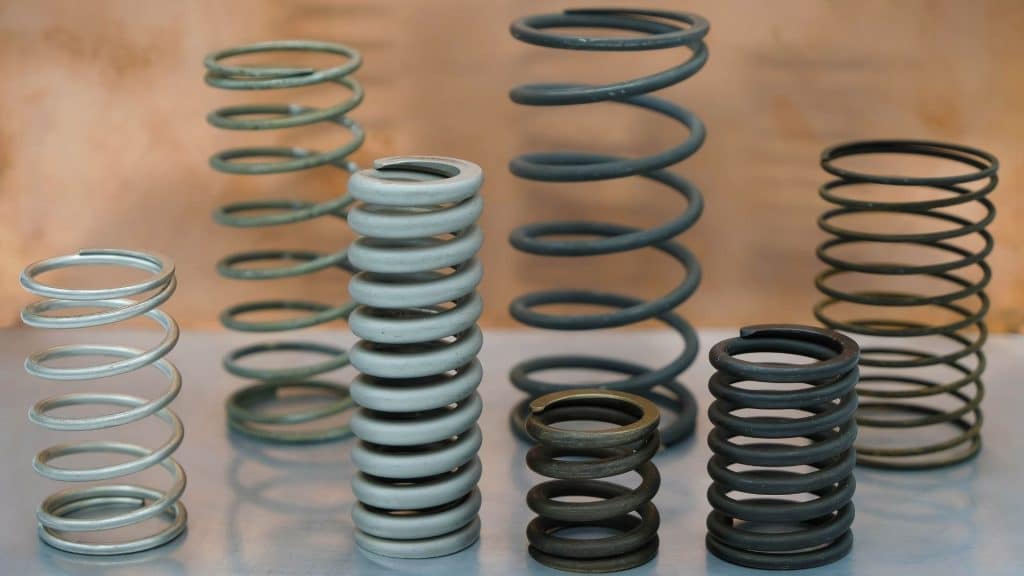
Many complex systems end up using a blend of both philosophies. A manufacturer might use standard tension springs for access panels and protective enclosures, but insist on a custom-designed torsion spring made from high-grade alloys for the primary mechanical drive.
The Metallurgical Variable in Severe Environments
For extreme environments, standard music wire or basic stainless steel grades are simply insufficient. When operating temperatures climb, or corrosive elements are present, the material’s chemistry dictates the component’s lifespan.
Superalloys such as Inconel, Hastelloy, Nimonic, and Elgiloy are frequently specified for mission-critical applications. These materials maintain their tensile strength and resist fatigue even under intense thermal cycles or when submerged in sour gas environments.
The manufacturing process must treat these materials with absolute care. Processes like hot or cold coiling, precise stress-relieving heat treatments, and shot peening to introduce beneficial compressive residual stress are what separate a high-performance component from a standard industrial spring. Without controlled manufacturing, even the most expensive superalloy can fail prematurely due to microscopic surface imperfections or improper grain structure alignment.
Assessing Manufacturing Capabilities on the Shop Floor
A supplier can only deliver what their machinery and quality control systems allow. When evaluating a production partner for critical components, the scope of their in-house manufacturing capabilities tells you everything you need to know about the control over the final product.
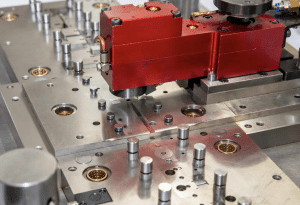
True manufacturing flexibility relies on having direct, in-house oversight of multiple disciplines. This includes advanced spring coiling for compression, tension, and torsion designs, as well as precision stamping and multi-slide production for complex metal pressings. It involves wire forming for intricate three-dimensional geometries and laser cutting for rapid shaping of components.
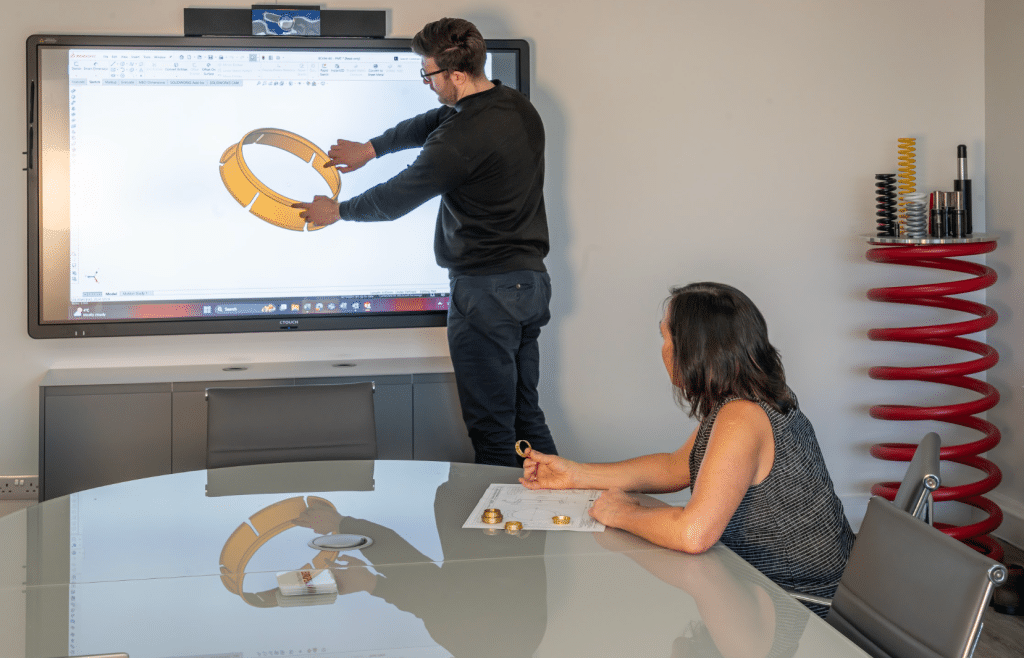
Crucially, the engineering support behind the machinery makes the real difference. Having access to in-house tool making, tool transfer capabilities, and comprehensive CAD design support ensures that design intent translates perfectly into a physical component. When a supplier can manage everything from early-stage prototyping and assembly integration through to full-scale high-volume production, it eliminates the risks associated with multi-tiered outsourcing.
Sector Specific Demands and Technical Expectations
Different industries bring completely unique challenges to the design table, but they all share an absolute zero-tolerance policy for component failure.
Aerospace and defence
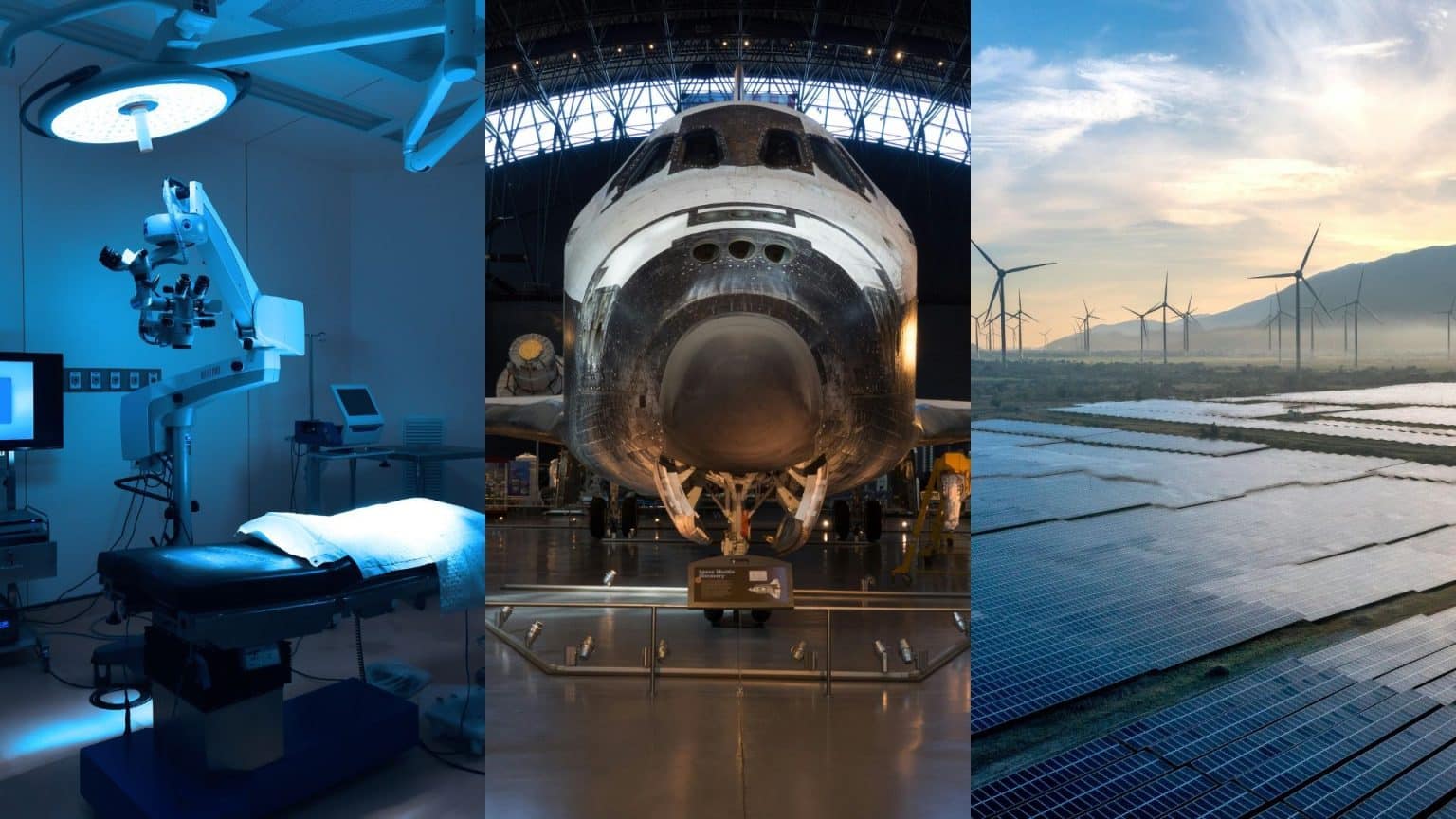
Vibration is the constant enemy in aviation and military systems. Components must withstand relentless high-frequency oscillations and rapid changes in atmospheric pressure without compromising their structural integrity. Weight efficiency must be balanced against extreme fatigue life, requiring precise geometric calculations.
Medical and healthcare
Medical applications operate at the other end of the spectrum, often demanding micro-scale precision. Springs used in surgical instruments or implantable devices must exhibit predictable, flawless behaviour within sterile environments, requiring specialised cleaning and biocompatible material selection.
Energy, hydraulics, and infrastructure
Downhole oil tools and heavy marine hydraulics face crushing pressures and aggressive chemical exposure. Here, the focus centres on long-term durability and resistance to hydrogen embrittlement or sulphide stress cracking, where a single component replacement could require pulling an entire rig offline.

Overcoming Sourcing Risks Through Early Collaboration
The most common reasons for mechanical failures do not usually stem from bad design concepts. They arise from subtle gaps between the initial design drawing and the practical realities of the factory floor.
To eliminate these blind spots, the sourcing process should look more like a technical partnership than a straightforward purchasing transaction. It means checking for full material traceability and verifying that the factory operates under rigorous quality assurance protocols such as ISO 9001.
Working with a technical team that can analyse your CAD models, run stress simulations, and suggest minor adjustments to improve manufacturability saves considerable time and expense. European Springs & Pressings has built its reputation on this collaborative approach since 1948, helping engineering teams move seamlessly from initial concepts to verified, high-volume production components that perform exactly as intended.
To discuss your specific load requirements, material challenges, or upcoming engineering projects, contact us today to speak directly with our team.