
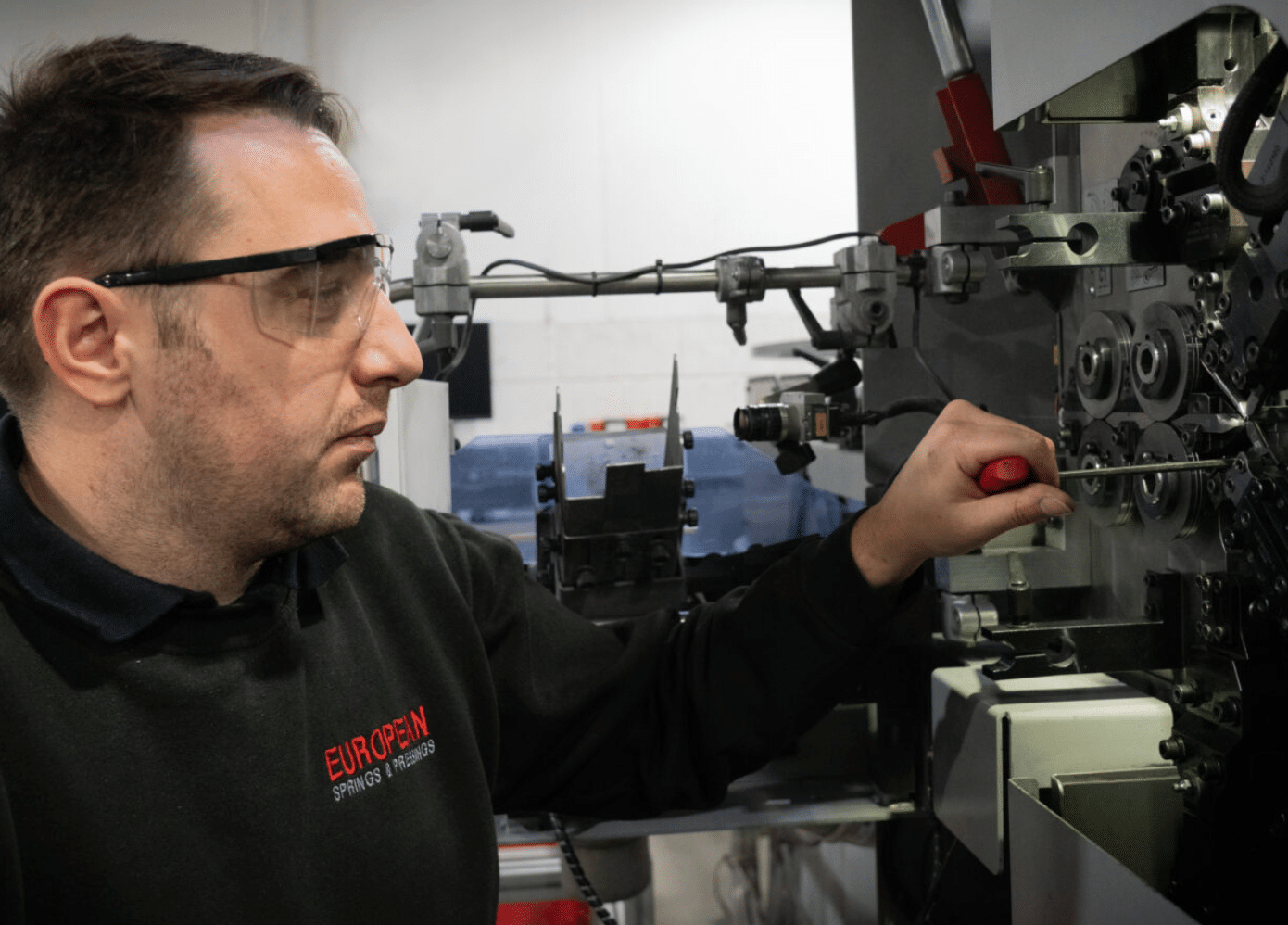
A custom spring stores and releases mechanical energy through controlled deflection. A wire form guides, retains, connects or supports components within an assembly. While both begin as wire, precision wireforming creates structural or positional components, whereas spring manufacturing creates dynamic force generating components.
Engineers and procurement teams frequently group custom springs and wire forms together because they share similar manufacturing origins. However, they solve entirely different mechanical challenges. Selecting the correct component during the design phase improves product performance, reduces manufacturing costs and prevents supply chain delays.
What Is the Core Engineering Difference?
Both components are essential to mechanical assemblies,but their fundamental purposes are very different.
- Custom Springs: Engineered to compress, extend or rotate. Their primary role is dynamic energy storage, shock absorption and continuous force control.
- Wire forms: Manufactured via custom wire forming processes to create highly specific geometric shapes. Their primary role is positional securing, clipping and structural support within an assembly.
| Feature | Custom Springs | Wire forms |
| Primary Function | Energy storage and controlled force | Structural support, retention and guidance |
| Typical Shape | Helical or coiled wire body | Bent and formed multi axis geometries |
| Operating State | Highly dynamic and cyclic | Primarily static with engineered flex |
| Manufacturing Focus | Load calculation and fatigue resistance | Precision metal stamping and bending |
| Common Uses | Valves, suspension systems, switches | Clips, brackets, retainers, hooks |
The Role of Custom Springs in Mechanical Design
Custom springs are developed for applications where repeated movement and load consistency are critical. Whether your project requires compression, tension, torsion or constant force properties, these components are designed around precise mechanical requirements.
Standard catalogue products frequently fall short in demanding industrial applications. We regularly engineer custom springs for oil & gas environments, vehicle suspension assemblies, and agriculture equipment. These specific applications require superior fatigue resistance and precise coil configurations to prevent premature mechanical failure under extreme stress.
Advancing Assembly with Custom Wire Forms
While springs handle force, wire forms handle structure. Custom wire forms are produced by manipulating wire into highly specific multi axis shapes. Because they lack a traditional coiled body, they can be engineered to fit almost any spatial constraint within your product housing.
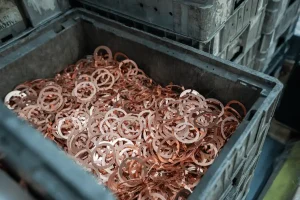
Our wire forming services provide critical structural components for complex assemblies. Common applications include retaining clips, battery contacts. Light fixtures and bespoke brackets.
These components snap into place, hold mating parts securely and guide moving elements without adding unnecessary weight to the final product. Working with experienced wire form manufacturers ensures that the final component is produced using the most efficient production techniques.
Precision Metal Stamping and Wire Forming Capabilities
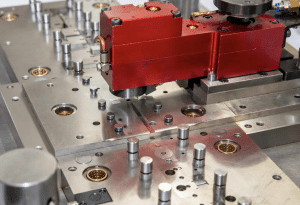
A common misconception is that a spring manufacturer only coils wire. In reality, producing robust industrial wire forms requires advanced precision metal stamping and OEM wire forming capabilities.
By combining these processes , we produce highly complex components that integrate seamlessly into larger assemblies. This integrated capability reduces supply chain complexity. Instead of sourcing springs from one supplier and wireforms from another, engineering teams can rely on a single ISO certified custom springs manufacturer to deliver both.
Choosing the Right Component for Your Application
Selecting the appropriate mechanical solution requires a clear understanding of the component’s primary job.
Specify a custom spring when:
- The assembly requires continuous force generation or shock absorption.
- The component must withstand repeated compression or extension cycles.
- Precise energy storage and return are critical to the mechanism.
Specify a custom wire form when:
- The primary function is holding, securing or linking other parts
- Internal space restrictions require a uniquely shaped component
- The design requires integration via custom wire forming materials and stamping processes
Material Selection for Industrial Environments
The operating environment largely dictates the material selection. We process a wide variety of custom wire forming materials to suit specific engineering challenges. This ranges from standard stainless steel grades for general manufacturing through to high performance superalloys for corrosive offshore environments. Identifying the correct tensile strength and environmental resistance early in the design phase prevents manufacturing delays and ensures complete reliability in the field.
Finding the best engineering solution starts with early collaboration. European Springs and Pressings is an ISO certified custom spring manufacturer delivering expert wire forming services alongside precision spring design. If you are developing a new assembly or optimising an existing product, contact our engineering team to discuss your exact specification requirements.
Frequently Asked Questions
Can a wire form function as a spring?
Yes. Many custom wireforms, such as retaining clips and fastening mechanisms, are designed with specific flex properties to secure components
Are wire forms custom manufactured?
Although some manufacturers offer standard catalogue products, most industrial wire forms are bespoke. They are engineered to match the precise geometry and performance requirements of the customer’s assembly.
What industries rely on wire forming services?
Industrial wire forms are widely used across aerospace, automotive, medical device manufacturing, electronics and agriculture. Any sector requiring precision securing or internal routing components relies on expert wire forming expertise.
How do precision metal stamping and wire forming work together?
Many assemblies require a component that features both a bent wire profile and a flattened, stamped section for mounting. Combining wire forming and stamping allows us to produce versatile, multifunctional components within a single production cycle.