
When managing an industrial engineering project, component procurement often plays a decisive role in shaping both the timeline and the overall success of the final assembly. . Navigating the design phase requires a balance between immediate component availability and exact mechanical performance.
Partnering with a single spring manufacturer that delivers both standard stock inventory and bespoke custom engineering streamlines this process. This dual capability enables design teams to quickly source standard parts for rapid prototyping and urgent maintenance, while ensuring a seamless transition to application-specific custom components for full-scale high performance production runs.
European Springs and Pressings provides this unified approach. By maintaining one of Europe’s largest catalogues of standard components alongside advanced bespoke manufacturing facilities, we eliminate the operational friction of switching suppliers mid project. This comprehensive capability ensures your project moves from initial concept to final market delivery without technical disruption.
Streamlining Prototyping through Immediate Stock Availability
Most engineering projects begin with a period of fluid design and rapid iteration. Dimensions shift, spatial housing constraints evolve, and load tolerances are continuously adjusted during initial physical testing. During this early stage, waiting weeks for custom manufactured parts can stall an entire development schedule.
Maintaining access to a comprehensive range of standard, ready-made components helps eliminate these delays. Stock springs allow development teams to build, test and validate mechanical concepts almost immediately, providing several practical advantages for your early stage builds:
- Faster prototype validation without the lead times or upfront tooling costs associated with custom manufacturing.
- Rapid troubleshooting options to test different spring rates and physical dimensions on the factory floor.
- Lower financial risk during initial design phases before final specifications are locked in.
- Simplified procurement for standard, non critical mechanical assemblies that require standard sizes.
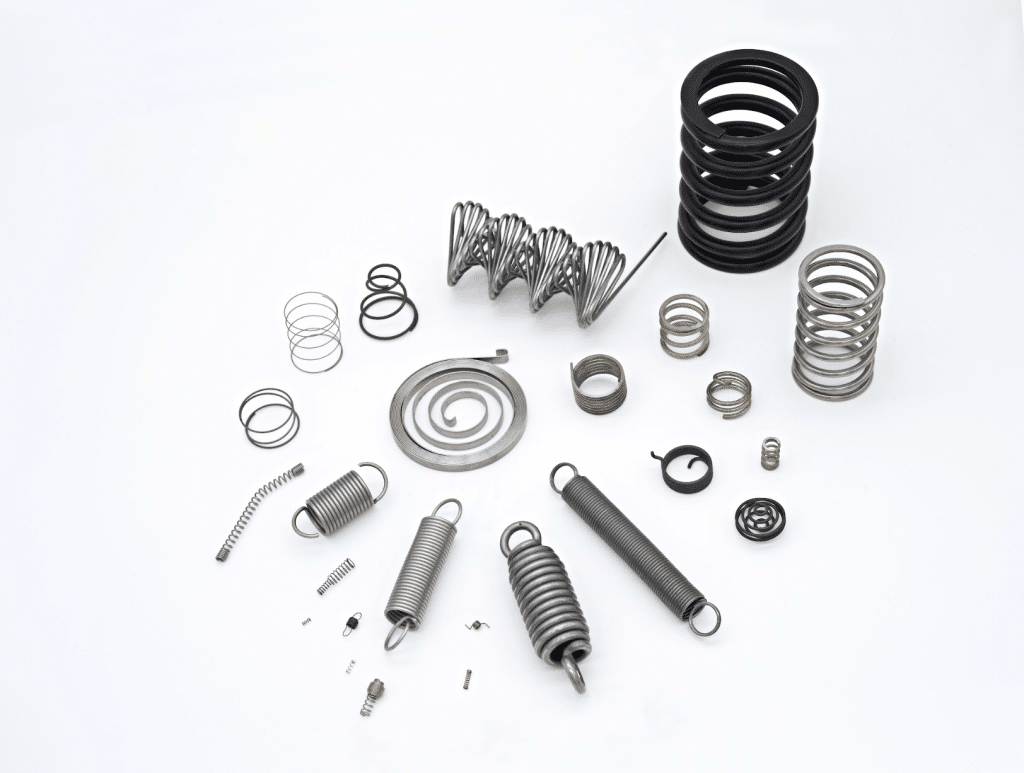
The benefits of stock availability extend beyond product development. In maintenance and repair situations, speed is equally important. A production line fault requires immediate resolution to prevent expensive operational downtime. Having direct access to a broad catalogue of ready made compression springs, tension springs and torsion springs ensures that maintenance teams can restore system functionality while longer term engineering evaluations are conducted.
Elevating Performance with Bespoke Custom Engineering
As a mechanical design matures, the limitations of general purpose catalogue components often become apparent. Harsh environmental conditions, strict spatial restrictions and exact force requirements demand wire dimensions and performance characteristics that standard inventories cannot satisfy. This is where specialised custom manufacturing becomes mandatory.
Bespoke custom spring design provides complete authority over the mechanical properties of the component. Custom engineering allows your team to define the exact wire diameter, coil geometry, end configurations and precise spring rate required for your mechanism.
Material selection is crucial for components operating in demanding industrial sectors. While standard stock items are typically produced using standard carbon steel or common stainless steel grades, safety critical applications require high performance alloys. We regularly manufacture custom springs using specialised materials, including:
These high performance materials retain their tensile strength, corrosion resistance and structural integrity in environments exposed to extreme heat, cryogenic temperatures or aggressive chemical elements. Custom manufacturing ensures the component is built to withstand the precise operational stresses of your application rather than forcing your product housing to adapt to the limitations of a standard catalogue part.
Stock Components vs Custom Manufacturing
Understanding the operational differences between these two procurement routes helps your engineering team select the correct approach for each stage of development.
| Operational Metric | Standard Stock Springs | Bespoke Custom Springs |
| Lead Time | Immediate dispatch from existing inventory | Production cycle required for tooling and setup |
| Upfront Cost | Lower initial investment ideal for small batches | Tooling and custom engineering fees apply |
| Design Flexibility | Limited to predefined catalogue dimensions | Completely unrestricted geometry and sizing |
| Material Variety | Common high volume steel grades | Broad selection of specialist and exotic alloys |
| Performance Focus | General purpose non critical applications | Mathematically optimised for exact cyclic loads |
| Traceability | Standard commercial compliance | Full material traceability and rigorous validation |
Transitioning from Concept to Production without Supplier Friction
Switching suppliers midway through a project can introduce unnecessary risk and overcomplicate your timeline. While buying standard items from a catalogue supplier may support early-stage testing, transitioning to a different manufacturer for mass production can create inconsistencies. A new manufacturer might use alternative materials, slightly different tolerances or different heat treatments. This can completely alter how the spring performs in your final assembly.
Using a single manufacturer for both stock and custom parts eliminates these challenges.. The exact same technical team that helped you select initial stock items through the prototyping stage can seamlessly guide your project straight into custom manufacturing once the final specifications have been established.
This continuity creates a smooth and predictable development process. Our design engineers use the data gathered during your early testing to refine the final bespoke specification. You avoid repeating work, miscommunication between different companies and unexpected performance changes.
Evaluating Total Lifecycle Costs Across the Supply Chain
While the upfront cost is always important, it rarely reflects the true financial impact of a component over its lifetime.. Standard stock springs cost less initially and work perfectly for early stage mockups or basic mechanical applications. However, putting a standard catalogue part into a high stress environment often leads to frequent failures, constant maintenance and expensive equipment downtime.
Although bespoke spring engineering requires a higher initial investment in design and manufacturing, it often delivers a significantly lower total lifecycle cost.
Because the spring is engineered specifically for its exact environment, premature failures drop dramatically. Your machinery runs longer without intervention, saving your business money on long term maintenance and protecting against unexpected breakdowns.
Critical Questions for Component Specification
Before choosing between a stock inventory item or a custom manufacturing run, your design team should evaluate these primary mechanical factors:
- What exact load capacity and spring rate must the component support during continuous operation?
- Is the physical installation space within the product housing strictly fixed or flexible?
- Will the component operate in corrosive environments, high temperatures or subsea conditions?
- What is the required fatigue life and expected total lifecycle of the final product?
- Are standard inventory sizes available that match these exact parameters without compromise?
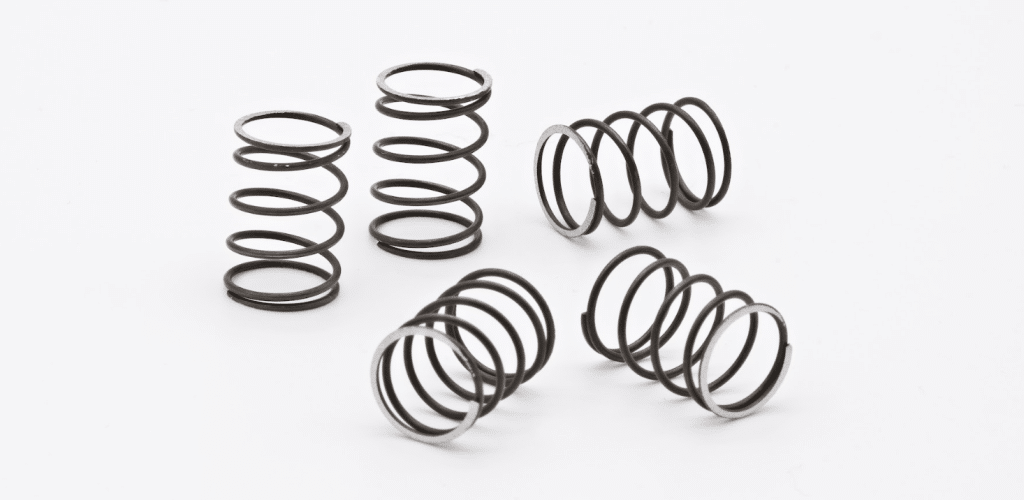
If your parameters sit comfortably within standard limits, a stock component provides a fast and economical solution. If your requirements fall outside of those standard dimensions or demand specialist alloys, bespoke engineering is required to ensure system reliability.
Whether your project requires immediate access to one of Europe’s largest inventories of standard components or the technical expertise of a state of the art bespoke manufacturing facility, European Springs and Pressings delivers a comprehensive supply route. Contact our UK engineering team today to discuss your design requirements, request a technical consultation or secure the exact specifications for your next industrial application.
Frequently Asked Questions
What are the main benefits of using a spring manufacturer with both capabilities?
A dual capability manufacturer provides a single supply route from initial concepts to mass production. This allows you to source ready made parts instantly for early testing or urgent repairs, while retaining the engineering support needed to scale up into precision custom components when exact specifications are required.
Can a stock catalogue spring be modified for custom applications?
Attempting to physically alter a standard catalogue spring, such as cutting coils or reshaping ends on the factory floor, permanently damages the structural integrity of the wire. This modification alters the spring rate unpredictably and significantly increases the risk of premature fatigue failure. Bespoke manufacturing is the only reliable method for achieving unique geometries.
How do I choose between stock and custom springs for my project?
Choose stock springs if you need immediate delivery, have flexible spatial tolerances and are working on a standard, non critical assembly. Choose custom springs if your application involves strict space restrictions, precise load parameters, high cyclic stress or harsh operating environments requiring specialist alloys.
What specialist materials are available through custom manufacturing?
Custom manufacturing provides access to an extensive selection of high performance alloys that are unavailable in standard stock catalogues. This includes Inconel, Hastelloy, Nimonic, titanium, phosphor bronze and beryllium copper, which are essential for aerospace, medical, automotive and oil & gas applications.