

Are delays, inconsistent output, or unpredictable tool performance becoming part of daily operations? If a press tool never seems to run the same way twice, the issue often isn’t the process – it’s the supplier behind it.
Engineering teams need suppliers who stabilise production, not add friction. This is where a press tool transfer can restore control, confidence, and consistency. Below is what experienced engineering teams need to understand about why suppliers fail, when to act, and how a structured transfer gets production back on track.
The real impact of an underperforming pressing supplier
Production Downtime
Slow repairs and unplanned stoppages have an immediate knock-on effect. Every hour of lost press time delays assemblies, increases pressure on teams, and puts delivery commitments at risk. What starts as a tooling issue quickly becomes a production problem.
Quality Issues
Inconsistent maintenance leads to:
- Tolerance drift
- Uneven wear
- Inconsistent part repeatability
You end up spending engineering time diagnosing faults instead of progressing planned work.
Deadlines Slip
When every week includes another ‘urgent fix’, predictability disappears. Before long, the team starts to accept delays as ‘normal,’ even though they shouldn’t be.
Why these problems continue
In many cases, the tool itself isn’t the root cause. The supplier is.
Common issues include:
- Overloaded capacity or limited tooling capability
- Poor communication and slow response times
- Lack of in-house expertise for complex press tools
- Long-term complacency from suppliers relying on repeat business
When this happens, the cost isn’t absorbed by the supplier, it’s absorbed by your operation.
When should I consider a tool transfer?
A press tool transfer should be considered if any of the following sound familiar:
- Simple repairs take days or weeks
- Quality variation is becoming a pattern, not an exception
- The true condition or remaining lifespan of the tool is unclear
- Updates are vague, delayed, or incomplete
- Material or component delays lack accountability
- Multiple suppliers are involved, with no single point of responsibility
Engineering teams often wait too long before acting. A planned tool transfer prevents future disruption rather than reacting to the next failure.
If these challenges apply, it’s time to involve a supplier who can remove pressure from your production line and not add to it.
What are the benefits of press tool transfer?
If your supplier is consistently underperforming, it may be time to explore alternatives, such as a press tool transfer to a more capable provider. Here’s how that can help:
- Reduced Downtime: A new supplier with better capacity and expertise can get your tools ready faster and more reliably.
- Improved Quality: Experienced toolmakers ensure your parts meet specifications consistently.
- Transparent Communication: A supplier who prioritises updates and documentation helps you plan production with confidence.
- Long-term Savings: Fewer repairs, less scrap, and smoother production cycles help your business stay on track.
Why Choose European Springs & Pressings for Tool Transfers
European Springs & Pressings approach tool transfers differently – because we are toolmakers first.
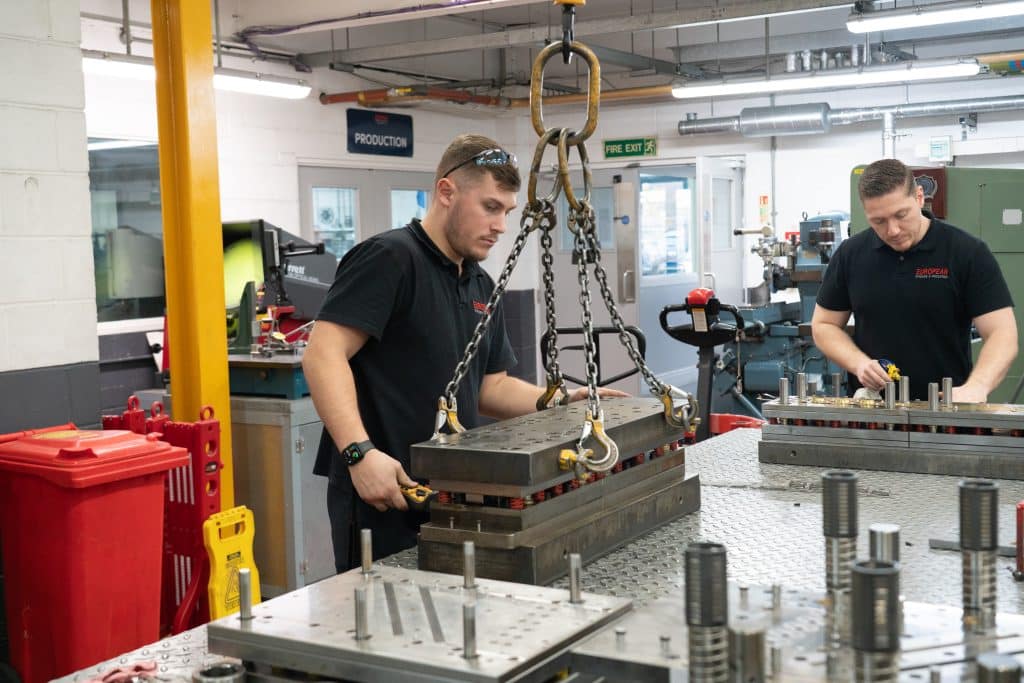
We design, manufacture, and maintain press tools in-house. That means when a tool arrives from another supplier, our engineers immediately understand:
- What condition it’s really in
- Where wear or weakness is developing
- Why performance has become inconsistent
Every transferred tool undergoes a full engineering evaluation, assessing condition, wear, fit, and structural integrity. This gives you a clear, honest picture of the tool’s current state, along with the true costs involved.
You then receive a detailed report outlining:
- Identified issues
- Repair or modification requirements
- Practical options aligned to your production timeline
Because we build tools ourselves, all repairs and improvements are carried out to the same standard as new tool manufacture. This ensures:
- Worn surfaces are corrected properly
- Weak design elements are strengthened
- Tool lifespan is extended, not temporarily patched
Once complete, the tool is fully run and validated in production, allowing you to move forward with confidence and consistency.
Don’t let your supplier hold you back
Your production line is only as reliable as the tools behind it. If your current pressing supplier is slowing you down, a press tool transfer may be the most effective way to regain control.
In manufacturing, time really is money and every delayed part is productivity lost.
Transfer your tools with European Springs & Pressings and get production back where it should be.