
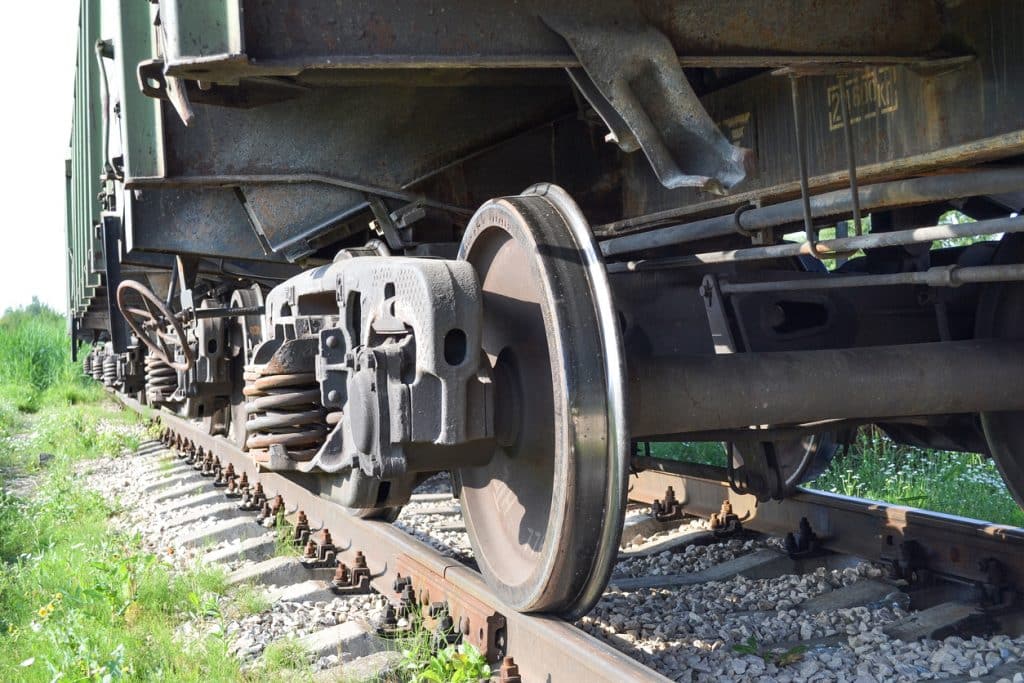
Springs are one of the most important components that make rail travel safe, stable, and comfortable.
As an experienced spring manufacturer, we see many uses for our springs throughout the transport sector, particularly within the rail industry. From train suspension springs that absorb vibration to railway bogie springs that stabilise rolling stock, spring components are essential to almost every moving system on a train.
Custom springs are used frequently throughout the rail network for suspension systems, pistons and as supports. This article explains how springs are used throughout the rail industry, the different types of railway springs, and why they are fundamental to performance, comfort and safety.
What are Springs Used for in the Rail Industry?
In the rail industry, springs are used to:
- Absorb shock and vibration.
- Maintain consistent contact between moving components.
- Control movement and load distribution.
- Improve passenger comfort and reduce component wear.
You’ll find train springs in suspension systems, bogies, braking assemblies, signalling equipment and power-collection systems.
Railway Bogie Springs and Load Control
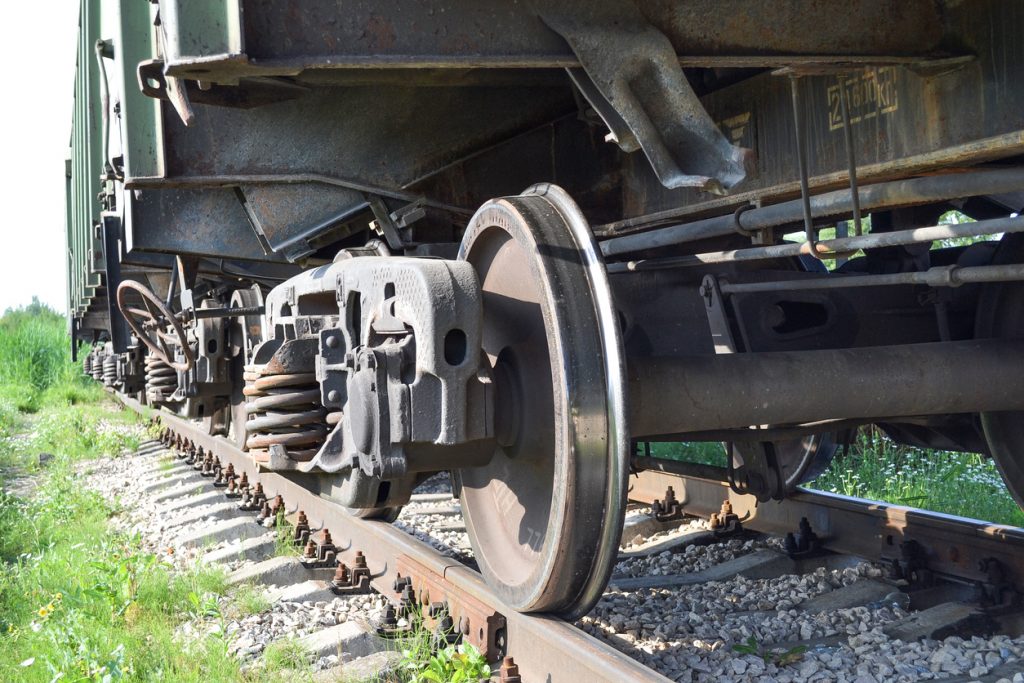
A bogie is the wheeled structure beneath a train that supports the vehicle body. Railway bogie springs are crucial for managing load distribution and dynamic forces.
Bogie springs help to:
- Support the weight of the carriage.
- Maintain consistent wheel-rail contact.
- Compensate for uneven track conditions.
Because bogies experience constant cyclic loading, they must be manufactured to tight tolerances and designed for long service life.
These systems have been developed and improved over years of design and testing. Bogie suspension systems were implemented because the space between the body of the train and the wheel needed a ‘cushion’ to reduce vibrations for passengers. By mounting a leaf steel spring on the axles, engineers have developed a bogie system with a more sophisticated suspension.
Primary and Secondary Suspension in Trains
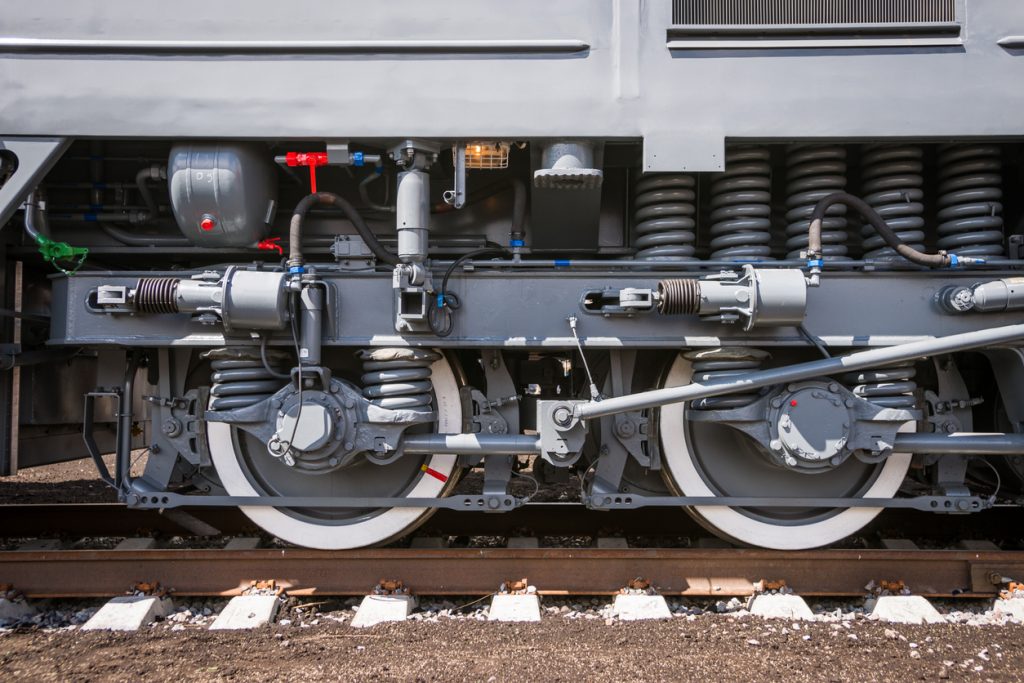
Modern rail vehicles use two distinct suspension stages, each serving a different purpose.
Primary and Secondary Suspension in Trains
Modern rail vehicles use two distinct suspension stages, each serving a different purpose.
Primary Suspension Springs
The primary suspension is made up of a standard spring-damper system that supports the carriage’s structural suspension and entire train. These damper systems are in every bogie between the axle box and the bogie.
The primary suspension component in a bogie is through a dashpot arrangement, which comprises of a cylinder piston. The lower spring seat acts as a cylinder, and the axle box guide serves as a piston.
The bogie bolster, or support, is the central section of the area and will carry most of the coach weight. The bogie pivots around using the pin, which is centred and uses parts of the secondary suspension system, typically coil springs and a spring plank.
Dashpots can also be found within door closers to prevent them from slamming shut, as well as in shock absorbers in electrical switch gears, and so much more.
Primary suspension springs help to:
- Reduce noise and vibration.
- Protect wheels and axles from shock loads.
Secondary Suspension System
The secondary suspension connects the carriage’s body with the bogie and ensures the comfort of passengers — isolating the vehicle from vibrations transmitted from the track.
In many modern passenger trains, air springs are used within the secondary suspension. These allow automatic ride-height adjustment and superior isolation from low-frequency vibrations transmitted from the track.

Bolster Support in Suspension Systems
The arrangement of the secondary suspension system is through the bolster springs. The bogie bolster is not structurally attached to the bogie frame. It is, however, connected through the anchor link, which is a tubular structure with cylindrical ends.
The anchor link is fixed to the bolster and the bogie frame with the assistance of brackets. Both ends of the anchor link form a hinge that allows movement of the bolster when the train is in transit.
Types of Springs Used in the Rail Industry
Different applications require different spring designs. Common railway spring types include:
- Compression springs – widely used in suspension and braking.
- Tension springs – commonly in signalling systems.
- Torsion springs – Used where rotational force is required.
- Custom-engineered springs – designed for specific load, fatigue, and environmental requirements.
If your business works within the rail industry and you’re looking for a custom spring manufacturer capable of meeting your business requirements, please request a quote to start a conversation or look at our spring catalogue for more details of the products we stock.
Frequently Asked Questions
A train suspension spring is a mechanical component used to absorb shock and vibration between the wheels, bogie and train body, improving comfort and stability.
A railway bogie spring supports the load of the train and helps maintain consistent wheel-rail contact while compensating for uneven track conditions.
Trains used compression, tension and torsion springs, as well as custom-designed railway springs tailored to specific applications.