
Manufacturers rely on precise components to keep their production line efficient, safe, and cost-effective. Pressings and stampings provide a proven method for producing high-quality parts at scale.
This guide explains how metal stamping works, where stampings are used, and what to consider when selecting a metal pressings manufacturer.
What is Metal Stamping?
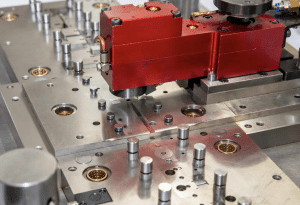
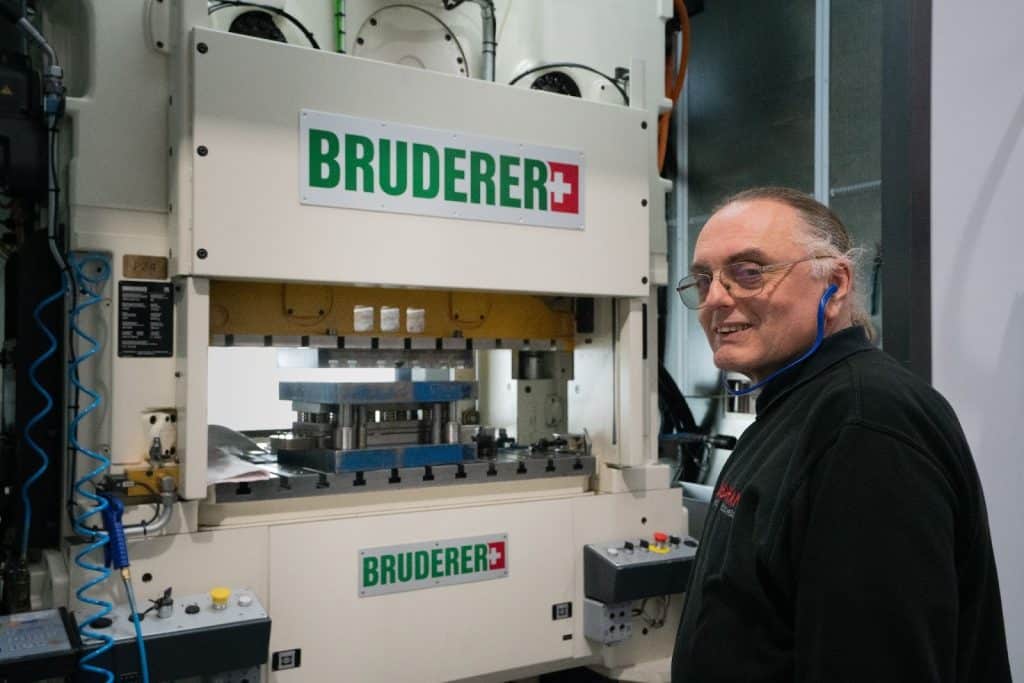
So, what is stamping in manufacturing? It’s a manufacturing process that forms flat sheets or coils of material into specific shapes using specialised tooling and machinery.
Often grouped under metal stamping industrial processes, it enables manufacturers to produce components with tight tolerances and consistent quality.
Depending on the application, engineers may need a single-operation product, or runs designed to meet demanding volume requirements.
Key advantages include:
- Excellent repeatability.
- Dimensional accuracy.
- Cost efficiency at scale.
- Compatibility with a wide range of materials.
- Reduced material waste.
Metal Stamping vs Traditional Spring Manufacturing
| Feature | Metal Stamping | Traditional Spring Manufacturing |
| Primary Output | Flat or 3D structural parts, brackets, and enclosures. | Coiled, tension, or torsion components designed to store mechanical energy. |
| Material Form | Flat sheets or continuous metal coils. | Metal wire or tubing. |
| Machinery Used | Stamping presses and custom dies. | CNC coiling machines and wire formers. |
| Advantage | High-speed, high-volume production of rigid, complex shapes. | Control over elasticity, load-bearing capability, and flexibility. |
European Springs is in the unique position to be able to offer our customers both metal stampings and traditional springs, in stock and custom varieties.
The Stamping Process Step by Step
The process of metal stamping contains stages including material preparation, tooling and die formation, and secondary forming processes, depending on the design.
- Design & Tooling
Experts will create a CAD design to gather a detailed simulation of the product. Following this, tool creation takes place, which facilitates the stamping of metal in a precise and consistent way, especially if many metal stampings are needed.
- Material Preparation
Once the metal for the stamping is selected, it is prepared for the stamping press. Materials used may include:
- Steel and stainless steel: Tensile strength and corrosion resistance (stainless steel) for durable structural components.
- Beryllium copper: High physical strength with electrical conductivity for parts in electronics.
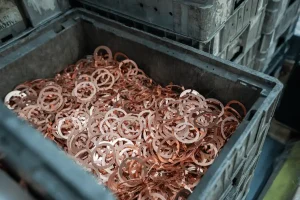
- Copper alloy: Malleable and chosen for its thermal and electrical conductivity.
- Nickel alloy: Maintains its structure and resists extreme heat and corrosion in demanding applications.
- Aluminium: Provides an excellent strength-to-weight ratio and corrosion resistance for automotive manufacturing.
- Brass: Features low friction, high machinability, and good electrical conductivity.
- Melinex: A versatile polyester film used for its strength and flexibility.
Our experienced engineers can advise on the most appropriate material for performance, manufacturability, and lifecycle considerations.
- Stamping Process
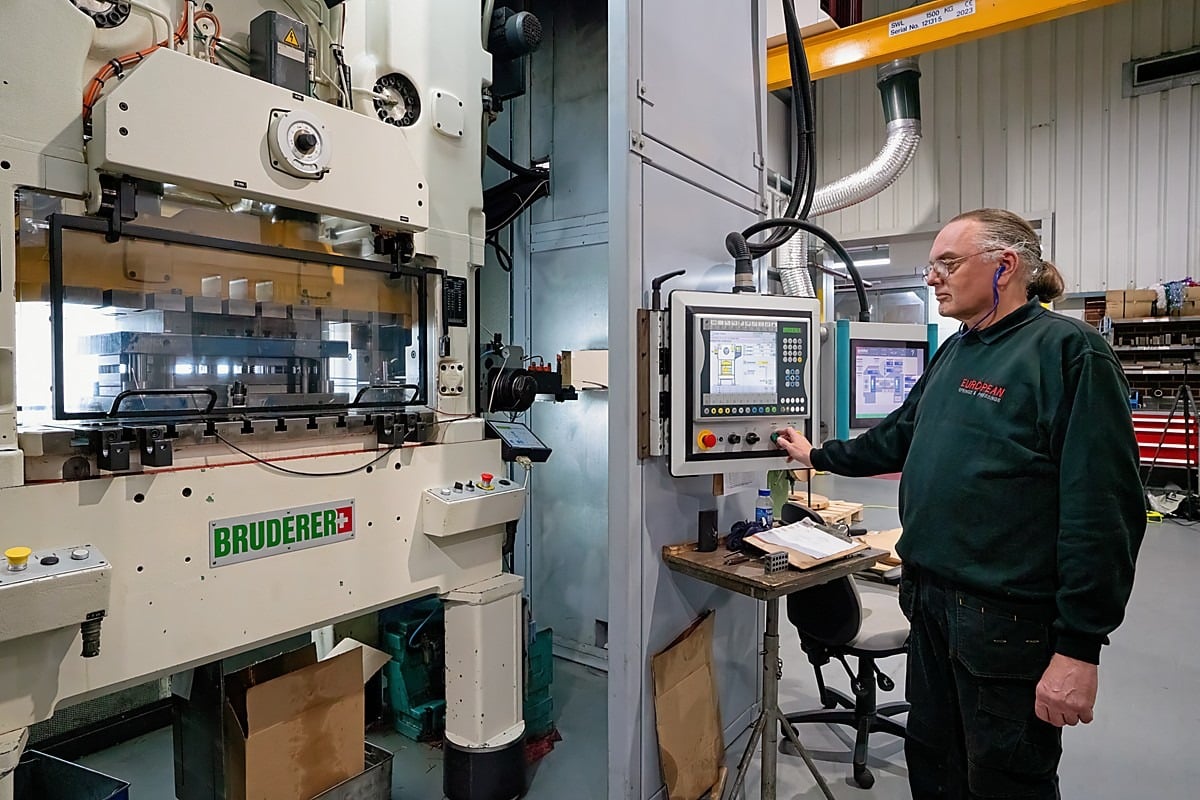
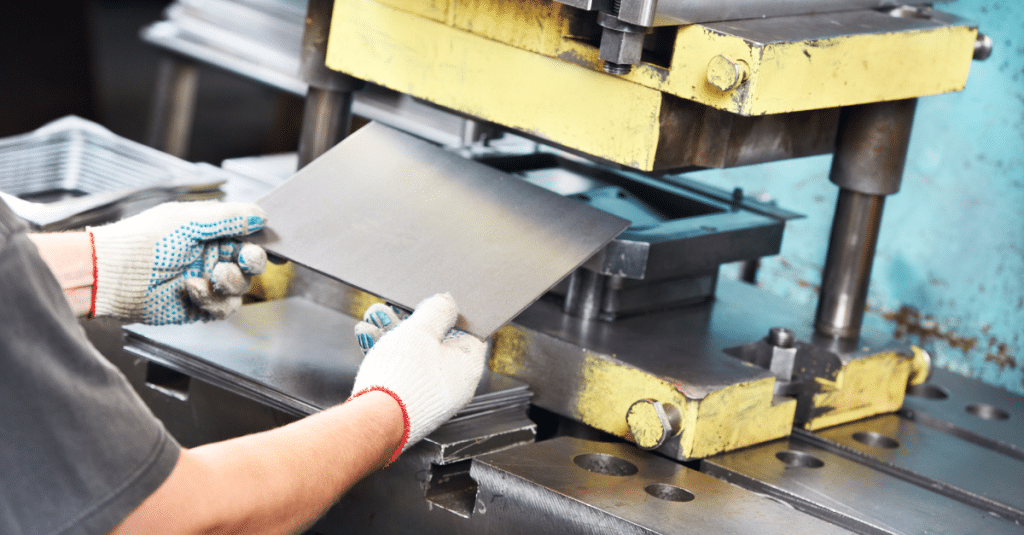
The chosen metal is fed into the stamping press, where the die cuts or shapes the metal, forcing it to take the required shape.
- Secondary Forming Processes
Depending on the design, additional techniques may be applied:
- Punching: Removing the desired shape from the surrounding material.
- Blanking: Cutting a flat shape for further processing.
- Embossing: Creating a shallow depression or raised feature.
- Bending: Forming the material along one or more axes.
- Flanging: Bending along a curved edge.
- Coining: Compressing patterns into the surface.
Other specialised pressings can include stretching, necking, and hemming.
The CAD design we create at the start of the process confirms that a component will withstand operational stresses to avoid roadblocks later on.
Are Pressings and Stampings the Same Thing?
These terms can be used interchangeably, as they both refer to shaping material with a press.
Sometimes, there are subtle distinctions:
- Stampings often describe higher-volume production using dedicated tooling.
- Pressings can refer more broadly to components formed through pressing operations.
Both processes result in precise, repeatable components suitable for demanding industrial applications.
What are Metal Stampings Used For?
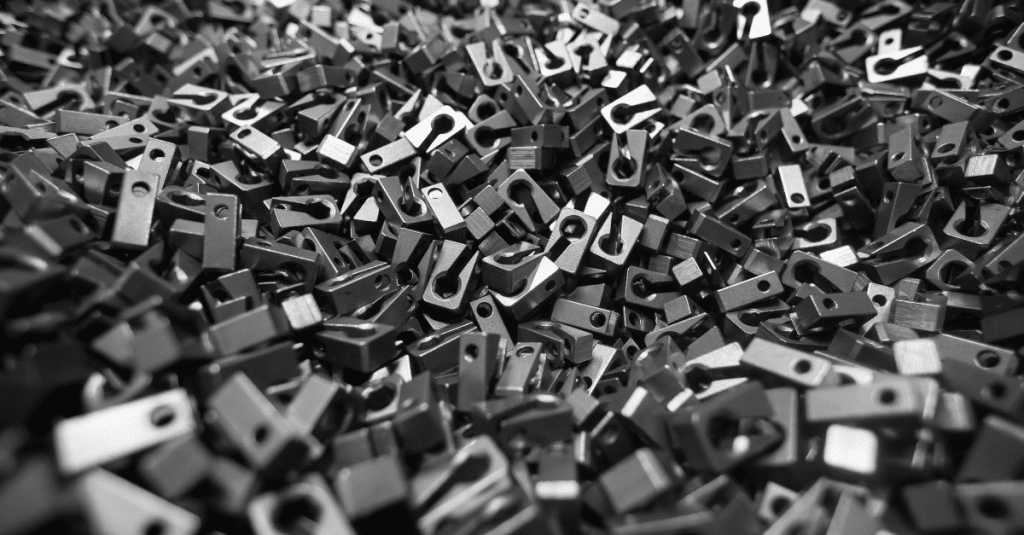
Metal stampings are used in nearly every major industrial sector. Common applications include:
- Electronics: clips, brackets, and connector housings.
- Automotive: structural and functional components.
- Medical: parts for surgical instruments and handheld devices.
- Aerospace: precision-engineered assemblies.
- Construction and rail: durable structural fittings.
- Oil & gas and agriculture: components exposed to demanding environments.
Material selection is often guided by factors such as corrosion resistance, electrical conductivity, weight, and temperature tolerance.
Choosing a Reliable Metal Stamping Partner
When selecting a provider for mechanical stamping or industrial pressings, reliability should be a primary consideration.
At European Springs & Pressings, we offer:
- Proven engineering expertise.
- Scalable production capability.
- Strong quality assurance processes.
- Industry-recognised certifications.
- Collaborative design guidance.
We’ll work closely with your team to understand performance requirements and develop components that support your operational goals.
Even if you don’t have a fully formed idea of what your pressing will look like, request a quote today to see how our team can help. We’ll guide you through the process and advise on any necessary aspects of your custom project.