
Changing manufacturing partners can feel like adding further risk to an already unstable situation. When a current partner struggles with quality control or consistently misses delivery deadlines, procurement teams face intense pressure. You need to safely transfer existing tooling from an underperforming supplier without disrupting your active production schedule. Moving your press tools to European Springs provides a secure route to a new manufacturing partner, rescuing your intellectual property and restoring supply chain reliability.
Establishing the Source of Component Failure
Before initiating an exit strategy, you must determine why components are failing inspection. A degraded tool requires a different approach from a factory lacking capacity. If the die or mould remains fundamentally sound, relocating it to a superior facility saves the immense cost of designing new equipment from scratch. A thorough engineering assessment determines whether the asset itself is viable.
Preparing Your Asset for Relocation
Extracting physical assets requires meticulous documentation. You must gather all technical data before notifying your supplier of departure. Secure the current technical drawings, original computer aided design models, and complete maintenance logs.
Understanding the precise physical state of the equipment is equally important. Your documentation should include:
- Exact material specifications and strip thickness
- Historical wear patterns on punches and inserts
- The overall weight and dimensions of the tool
- Required component tolerances
Documenting these exact metrics ensures the receiving factory can safely handle and integrate the equipment upon arrival.
Protecting Your Production Schedule
Procurement managers rightly fear downtime during a transition. A safe transfer relies on building adequate buffer stock before severing ties. Secure at least four to eight weeks of finished inventory to cover the physical transit and testing phases.
You should also settle undisputed invoices with the original supplier. Resolving outstanding balances prevents contractual disputes and ensures your assets are released without legal friction. This preparation allows your business to maintain client commitments while the engineering teams work in the background.
Verifying Machinery Compatibility
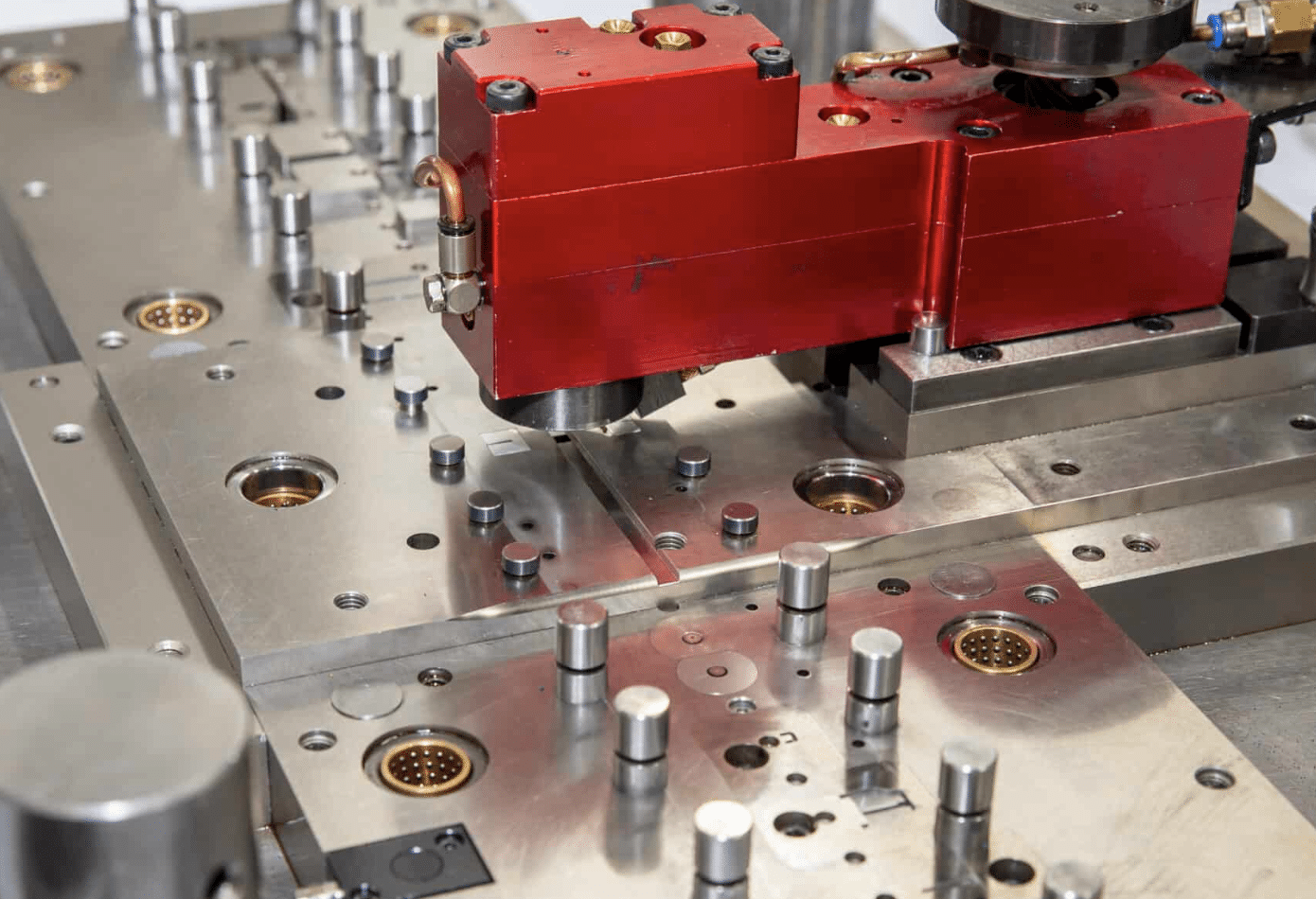
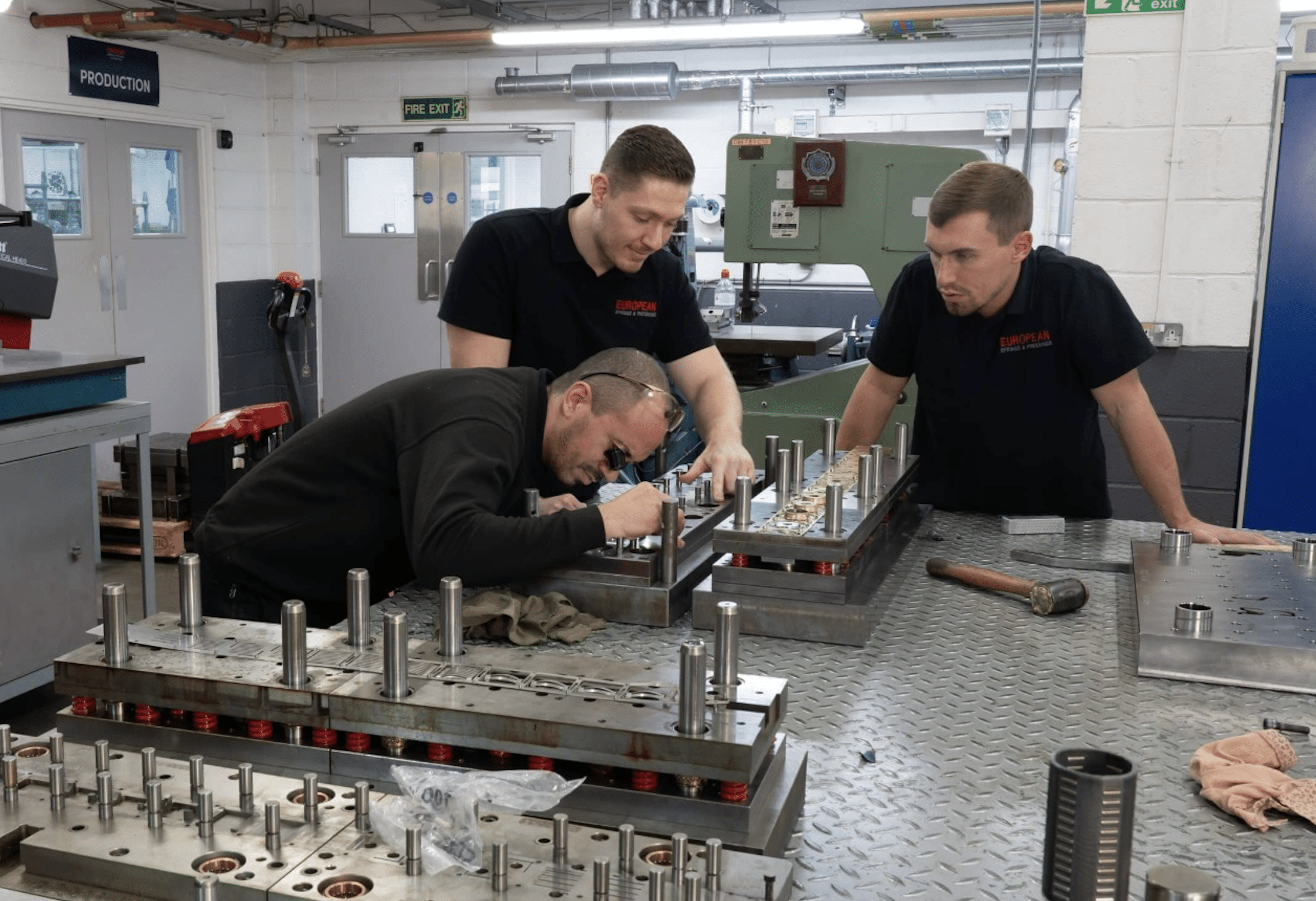
A press tool configured for one machine will rarely transfer to another without some level of adjustment. High-speed stamping tools and complex progression dies can face distinct alignment risks during relocation. The receiving engineers must verify setup compatibility long before the delivery truck arrives.
European Springs operates highly capable press beds, including high-speed Bruderer and Mabu units up to 130 tonnes. The engineering team evaluates shut heights, stroke lengths, and tonnage requirements to ensure your equipment aligns precisely with their factory capabilities. This early verification highlights potential integration issues early in the planning phase.
A Structured Approach to Tool Integration
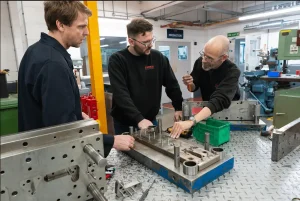
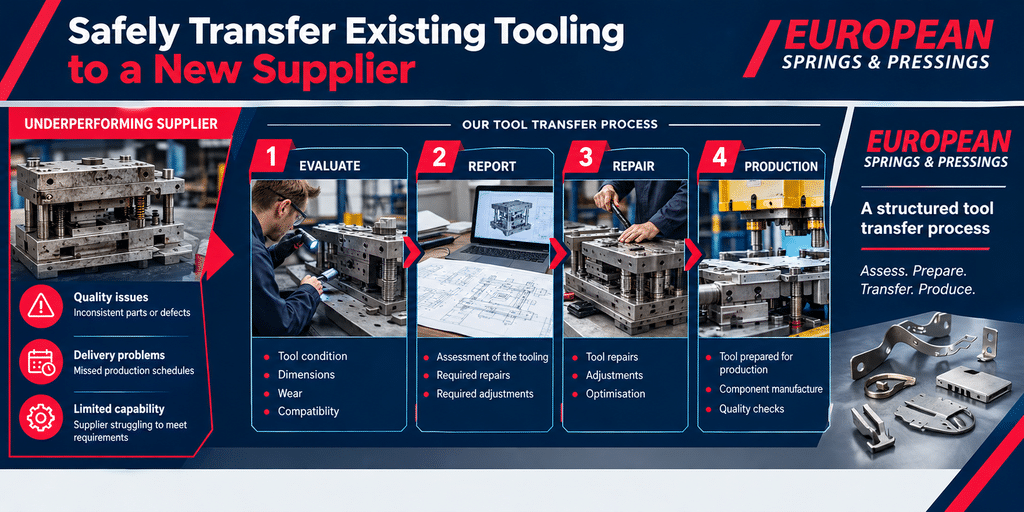
Dropping an old tool into a new factory blind is a significant operational risk. European Springs utilises a strictly managed onboarding sequence to absorb established press tools safely into their UK-based toolrooms.
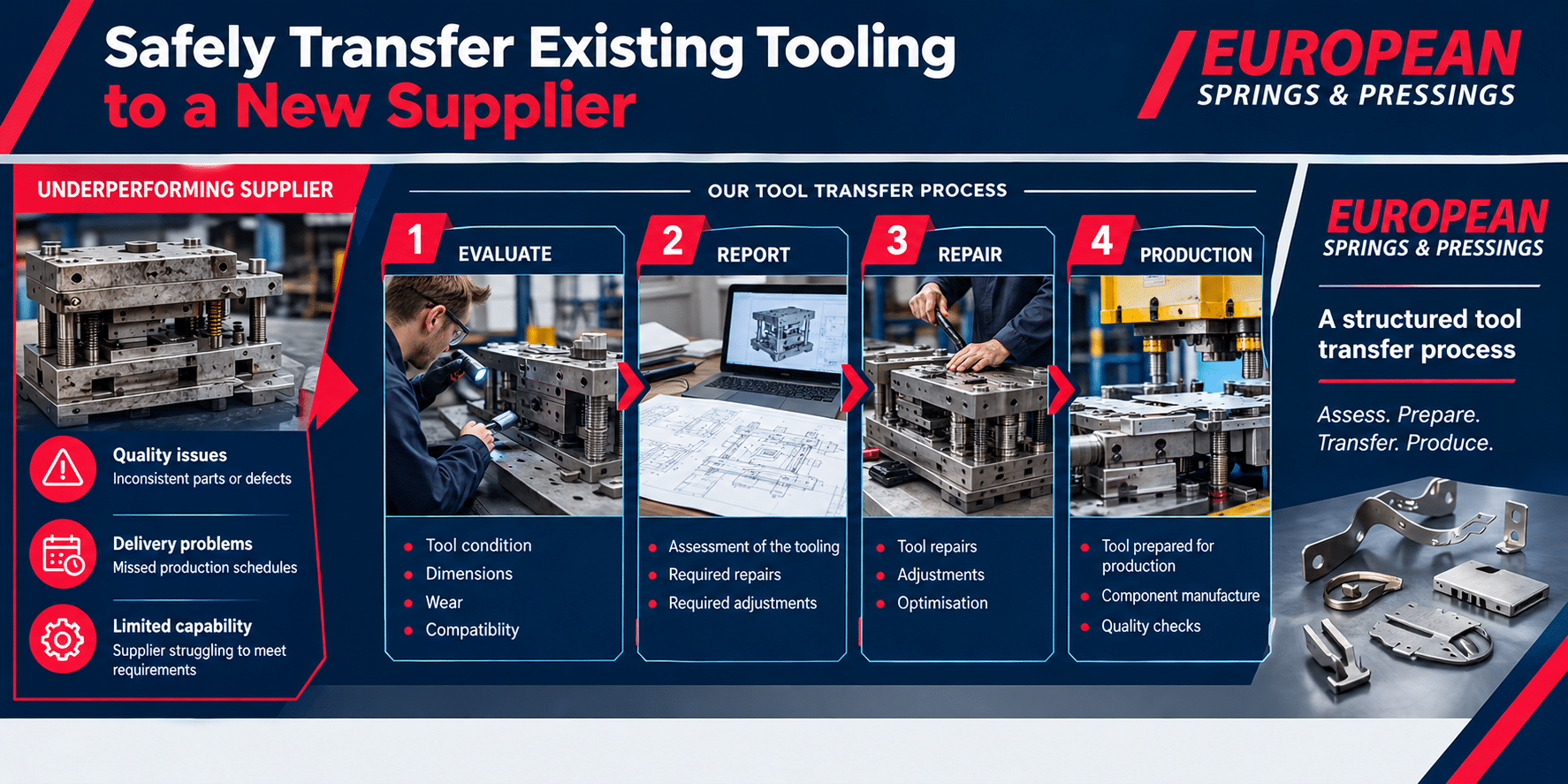
- Evaluate: Engineers inspect the incoming equipment directly within a dedicated toolroom to assess physical wear, overall quality, and machine fit
- Report: You receive a detailed appraisal outlining the exact modifications required to achieve your necessary manufacturing tolerances
- Repair: The tool making team corrects worn components and completes any machine specific adaptations prior to live manufacturing
- Production: First article inspections confirm component consistency before volume manufacturing commences
This methodical sequence removes uncertainty from the handover, providing clarity on the condition of your tool and the necessary investment before production begins.
The Value of In-House Tooling Expertise
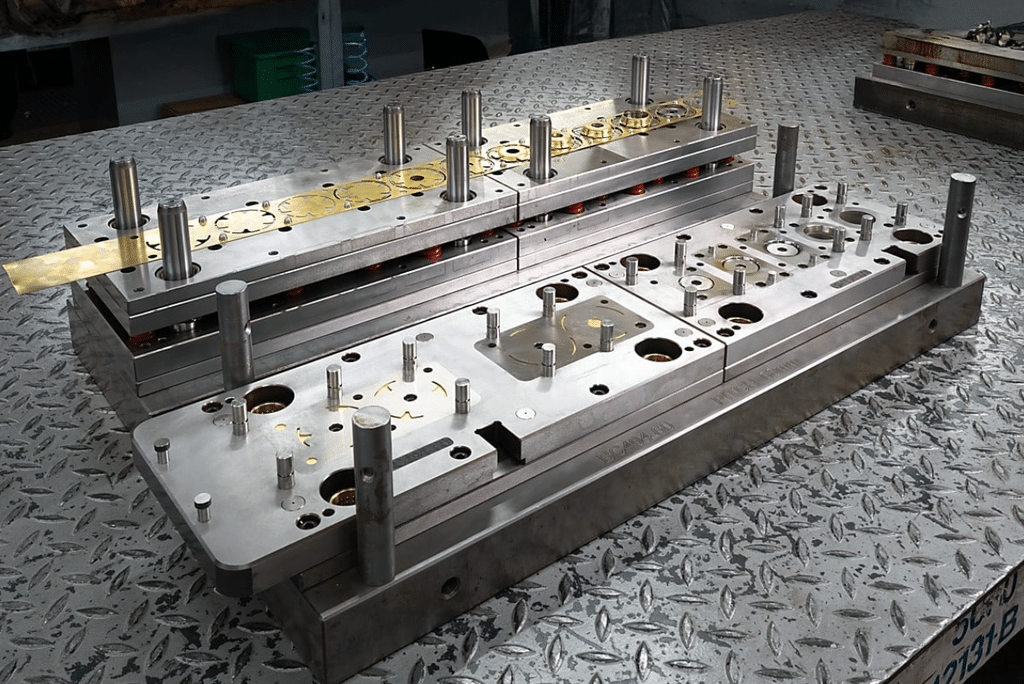
Transferring equipment often reveals hidden damage or historical neglect. Moving your assets to a facility lacking a dedicated toolroom causes significant production delays when repairs become necessary.
European Springs integrates assessment, precision stamping and quality assurance under one roof. With ISO 9001 certification and over 70 years of manufacturing experience, their engineers possess the authority to modify, optimise, and rebuild transferred assets immediately. This capability prevents delays and guarantees your parts meet original specifications. You gain a manufacturing partner capable of taking complete responsibility for the final component.
Leaving an unreliable manufacturer stops ongoing quality defects and missed deliveries. Request a tool transfer consultation with European Springs & Pressings today. Provide your component specifications and production volumes to the engineering team today so they can guide you through the next stage.